


We have all felt it. The tight chest before a hard talk. The racing mind before sleep. The sudden wave of stress in the middle of a normal day. In these moments, we often look outside ourselves for relief, yet one of the fastest tools is already with us. It is the breath.
Breathwork for immediate state regulation means changing how we breathe so we can change how we feel in the moment.
This is not magic. It is physiology. Breathing patterns influence heart rate, muscle tension, and the signals sent through the nervous system. When we breathe fast and high in the chest, the body often reads danger. When we breathe slowly and steadily, the body often receives a different message. Safer. Calmer. More settled.
In our experience, this shift can happen within minutes. Not because life changed, but because our internal state did.
Why the breath works so fast
The breath is one of the few body processes that runs on its own, yet can also be guided on purpose. That makes it a bridge between automatic stress reactions and conscious choice.
Research supports this practical view. Meta-analytic findings on slow-paced breathing showed stronger stress-reducing effects when breathing was slower and done in an individual setting. The results were small to medium in nonclinical groups, but steady across common stress measures. That matters because immediate state regulation does not need a dramatic change. Often, a modest shift is enough to help us think better, speak with more care, and stop reacting on impulse.
We also find it useful to look at repetition over time. A pilot preprint on slow resonant breathing reported that people practicing about 5 to 10 minutes a day over several weeks showed lower perceived stress, lower resting heart rate, and higher heart rate variability compared with baseline. The study is still pending peer review, but the pattern matches what many people notice early. When the breath becomes more regulated, the state becomes more workable.
State changes start with one breath.
What immediate state regulation looks like
Immediate regulation does not mean forcing ourselves to feel peaceful when we are upset. It means helping the system move from overwhelm toward steadiness. Sometimes that means calming down. Sometimes it means waking up from fog, passivity, or emotional heaviness.
We can think of breathwork as a matching tool. The technique should fit the state we are in. If we are anxious, we usually need length, slowness, and softness. If we are dull or mentally flat, we may need a more active rhythm.
The main signs that breathwork may help right now include:
Shallow breathing or breath holding
Racing thoughts
Tension in the jaw, shoulders, or stomach
Strong emotional reactivity
Difficulty focusing on the next step
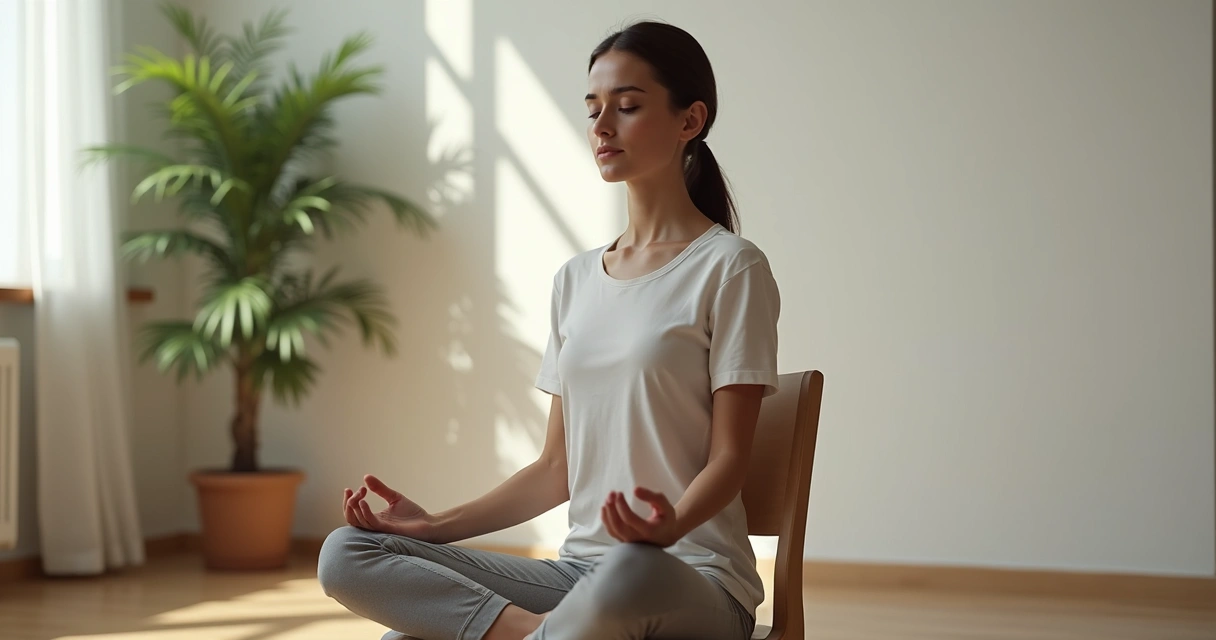
We do not need a perfect setting. A chair, a parked car, a bathroom break, or a quiet corner is often enough.
Three methods we can use right away
Below are three simple methods that work well for immediate state regulation. Each one has a different purpose, so we can choose based on what is happening in the body.
Extended exhale breathing
This is our first choice for stress, anger, and mental overdrive.
A longer exhale tends to signal safety and helps the body reduce activation.
We can try this sequence:
Inhale through the nose for 4 seconds.
Exhale through the nose or mouth for 6 to 8 seconds.
Repeat for 1 to 3 minutes.
Keep the breath light. There is no need to pull in more air than the body wants. If we push too hard, calm breathing becomes another form of strain.
Box breathing
This method works well when the mind feels scattered and we need structure.
Try this pattern:
Inhale for 4 seconds.
Hold for 4 seconds.
Exhale for 4 seconds.
Hold for 4 seconds.
Repeat for 4 rounds. If the holds feel uncomfortable, shorten them. The value here is rhythm, not effort. We have seen that even a short round can interrupt spiraling thoughts and restore a sense of internal order.
Resonant slow breathing
This is often close to 5 or 6 breaths per minute. It is a strong choice when we want a fuller nervous system reset.
Slow resonant breathing often means inhaling for about 5 seconds and exhaling for about 5 seconds.
Do this for 3 to 5 minutes. Many people notice that the first minute feels awkward, then the body starts to settle. It is common to feel a yawn, a sigh, warmth in the hands, or clearer thinking.
How to choose the right technique in the moment
We like a simple rule. Match the breath to the need.
If we feel anxious or irritated, choose extended exhale breathing.
If we feel scattered or impulsive, choose box breathing.
If we feel stressed and want deeper balance, choose resonant slow breathing.
This can become very practical. Before a meeting, we may do one minute of extended exhales. After a conflict, we may do three minutes of slow breathing before answering a message. At night, when the body is tired but the mind is still moving, resonant breathing often feels more natural than trying to force sleep.

Common mistakes that make breathwork less effective
Breathwork is simple, but not always easy. Some habits reduce its effect.
The most common ones are:
Breathing too deeply and creating dizziness
Forcing a pace that feels unnatural
Raising the shoulders instead of letting the ribs move softly
Stopping after 20 seconds and deciding it does not work
We think a better goal is gentleness plus consistency. Many people expect instant peace. Sometimes what comes first is simply less noise inside. That is already a real shift.
When to be careful
Most gentle breathwork is well tolerated, but not every technique fits every person. If someone has a respiratory condition, heart concerns, panic linked to breath focus, or is pregnant, it makes sense to speak with a qualified health professional before trying intense practices or long breath holds.
If a breathing pattern causes pain, panic, tingling that grows strong, or faintness, stop and return to normal breathing.
We also prefer to keep immediate regulation methods simple. This article is about short, grounded practices, not extreme methods.
Conclusion
Breathwork gives us a direct way to influence our inner state when life feels too fast, too loud, or too heavy. We may not control every trigger, but we can learn to meet the moment with more steadiness. A slower exhale, a steady count, a few minutes of resonant breathing. Small acts. Real effects.
When practiced with care, the breath becomes more than an automatic function. It becomes a form of self-regulation, presence, and choice. We do not always need a long process to begin changing our state. Sometimes we need one conscious breath, then another, and then the return of enough clarity to act well.
Frequently asked questions
What is breathwork for state regulation?
It is the practice of changing breathing rhythm, depth, or timing to influence how we feel and function in the moment. It can help calm stress, reduce mental agitation, and support clearer thinking.
How can I start using breathwork?
We suggest starting with one simple method, such as inhaling for 4 seconds and exhaling for 6 seconds, for 2 minutes. Practice in a calm place first, then use it during daily stress once it feels familiar.
What are the fastest breathwork techniques?
For many people, extended exhale breathing works fastest for calming down. Box breathing can quickly organize a scattered mind, and slow resonant breathing can create a broader sense of regulation within a few minutes.
Is breathwork safe for everyone?
Gentle breathing practices are often safe, but not for every situation. People with medical or mental health concerns should be cautious with intense methods, breath holds, or anything that causes distress, and seek professional guidance when needed.
How often should I practice breathwork?
A short daily practice of 3 to 10 minutes is a good starting point. We find that regular practice makes it easier to use breathwork effectively during stressful moments, because the body learns the pattern over time.