


We all know the feeling. We sit down for five quiet minutes, ready to reflect, and within seconds the mind starts pulling in ten directions. A message we forgot to answer. A hard conversation from yesterday. A future problem that has not happened. A memory that still stings. This is internal noise, and it makes honest self-reflection much harder than it should be.
Internal noise is the mental and emotional clutter that blocks clear self-observation.
In our experience, self-reflection does not fail because people do not care. It fails because attention is crowded. The mind is busy, the body is tense, and emotion is often louder than awareness. When that happens, reflection turns into rumination, self-judgment, or scattered thinking.
There is a better way. We can reduce internal noise by treating it as a daily condition, not as a personal flaw. Once we see that clearly, we stop fighting ourselves and start creating conditions for better insight.
What internal noise looks like in daily life
Internal noise is not only overthinking. Sometimes it appears as speed. Sometimes it appears as numbness. Sometimes it hides inside constant action. We may look focused from the outside while feeling split on the inside.
We have seen that internal noise often takes a few common forms:
Repeating thoughts that never lead to a decision
Emotional reactions that stay active long after an event ends
Constant switching between tasks, tabs, and worries
Self-talk filled with pressure, guilt, or comparison
One reason this matters so much is that wandering thought takes up a large part of human experience. According to findings summarized by the Harvard Gazette, people spend about 46.9% of waking hours with their minds wandering. That does not mean all mind-wandering is bad, but it does show how easily our attention leaves the present. If we want clearer self-reflection, we need to work with that fact instead of denying it.
Noise steals honesty.
Why quiet reflection feels difficult
Many people think reflection should feel natural. Sometimes it does. Often it does not. Reflection asks us to pause long enough to notice what is true, and that can feel uncomfortable. We may meet frustration, shame, fatigue, or confusion. So the mind protects itself by staying busy.
We once spoke with someone who said, “Every time I try to reflect, I just make a to-do list.” That sentence says a lot. When inner space feels unsafe, we replace awareness with activity. The result is a full day and a blurry mind.
Sharp self-reflection begins when we can stay present without rushing to fix, defend, or avoid.
This is why reducing noise is less about forcing silence and more about building stability.
How to lower the noise before reflection
The quality of reflection depends on the state we bring into it. If we wait until the mind is already overloaded, self-reflection becomes cleanup. A better approach is to lower stimulation first.
These practices help create that shift:
Pause the input for a few minutes. Step away from screens, music, and conversation before reflecting.
Settle the body. Take slow breaths, unclench the jaw, and let the shoulders drop.
Name the dominant emotion. A simple label like “anger,” “fear,” or “sadness” reduces confusion.
Use one question only. Too many questions create more noise.
We think this sequence works because it respects how human attention actually functions. The mind does not move from chaos to clarity in one jump. It needs a short transition.

Build a reflection rhythm that protects clarity
Daily self-reflection does not need to be long. In fact, shorter often works better. When we expect a deep breakthrough every day, pressure rises and honesty drops. We suggest a rhythm that feels sustainable and plain.
A simple daily structure can look like this:
Morning: ask, “What state am I bringing into this day?”
Midday: ask, “What is draining my attention right now?”
Evening: ask, “Where was I aligned, and where was I reactive?”
That is enough. Reflection gets sharper when it becomes direct. We do not need to write pages every day. We need to notice patterns before they become habits.
Clear reflection comes from consistency, not from intensity.
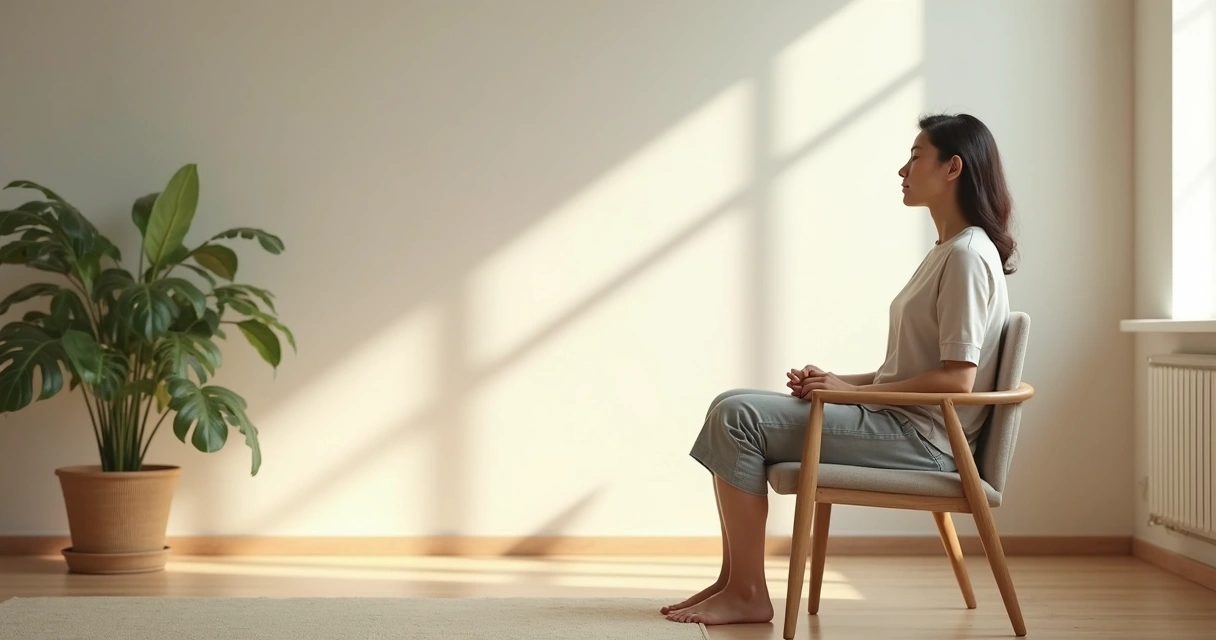
It also helps to keep the same place and same time when possible. Small rituals train the mind to settle faster. A chair by the window. A notebook used only for reflection. Three quiet minutes before sleep. These details may seem small, but they reduce friction.
Separate reflection from rumination
This distinction changes everything. Reflection brings understanding. Rumination repeats pain without movement. Reflection asks, “What happened in me?” Rumination asks, “Why am I like this?” One opens awareness. The other tightens identity.
We can tell the difference by checking what happens after a few minutes:
If we feel clearer, calmer, or more honest, we are reflecting.
If we feel trapped, harsh, or mentally exhausted, we are ruminating.
If the same thought loops with no new insight, we need to stop and reset.
When that loop appears, it helps to shift from interpretation to observation. Instead of “I always ruin things,” write, “I interrupted someone in that meeting because I felt threatened.” One is a global attack. The other is usable truth.
Name facts before meaning.
Protect your mind from avoidable noise
Not all internal noise starts inside us. A lot of it is fed by environment, pace, and habits. If the first and last thing we do each day is absorb stimulation, our reflective capacity weakens.
We have found that a few boundaries help a lot:
Do not begin reflection right after scrolling or multitasking.
Limit background noise when doing inner work.
Avoid reflecting only when upset. Calm days also need attention.
Write brief notes during the day so the mind does not carry everything at once.
These are not rigid rules. They are supports. Reflection becomes sharper when our system is less crowded.
Questions that lead to deeper honesty
Good reflection questions reduce noise because they direct attention. Vague questions often invite vague answers. We prefer prompts that are simple and hard to escape.
Here are a few that work well:
What am I avoiding admitting?
Which feeling shaped my choices today?
Where did I act from pressure instead of clarity?
What needs repair, not justification?
Sometimes one honest answer is enough to change the tone of a whole day. We do not need dramatic insight. We need contact with reality.
Conclusion
Reducing internal noise is not about becoming empty, passive, or detached. It is about making space to perceive ourselves with more truth. When the noise drops, even a little, self-reflection becomes less confusing and more grounded. We see our patterns sooner. We react with less force. We choose with more awareness.
That is the real gain. Not perfection. Not constant calm. Just a cleaner inner field from which we can think, feel, and act with coherence. If we practice that daily, even in short moments, reflection stops being a burden and becomes a form of inner alignment.
Frequently asked questions
What is internal noise in self-reflection?
Internal noise in self-reflection is the mix of distracting thoughts, emotional residue, mental pressure, and overstimulation that makes it hard to observe ourselves clearly. It often shows up as looping thoughts, scattered attention, or reactive self-talk.
How can I reduce internal noise daily?
We can reduce internal noise daily by lowering stimulation before reflection, calming the body, naming what we feel, and using one clear question at a time. Short routines, quiet spaces, and a few minutes of honest writing also help a lot.
What are common sources of internal noise?
Common sources include unresolved emotions, constant digital input, lack of rest, multitasking, pressure to perform, and self-judgment. Fast routines and unprocessed stress also make the mind more crowded.
Is daily self-reflection really worth it?
Yes. Daily self-reflection helps us notice patterns earlier, respond with more awareness, and correct behavior before it becomes automatic. Even a brief practice can improve emotional clarity and inner steadiness over time.
What tools help sharpen self-reflection?
Helpful tools include a notebook, a quiet place, a fixed reflection time, short prompts, breathing practices, and simple emotion labels. The best tools are the ones that reduce distraction and support honest observation.