

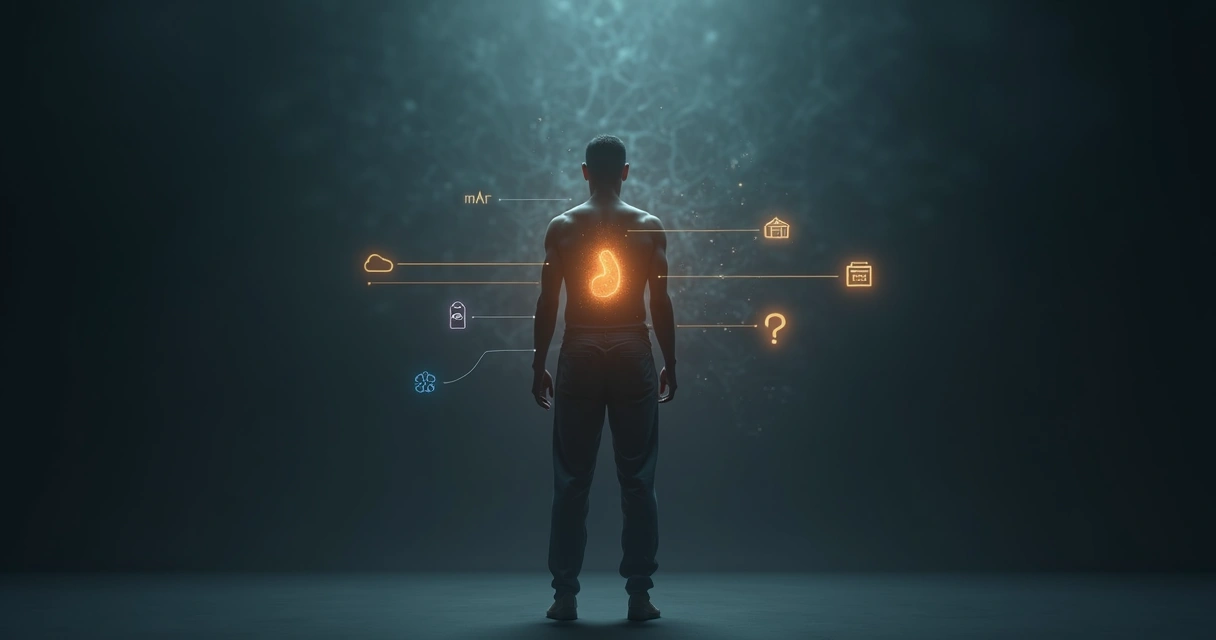
We have all lived this scene. A choice looks right on paper, yet the body tightens. Another option seems uncertain, yet something in us softens and says yes. Before we explain our decision, the body has often spoken first.
Somatic markers are body-based signals that help guide our choices before full conscious reasoning is complete.
These signals may show up as a knot in the stomach, pressure in the chest, a calm breath, warm relief, restlessness, or sudden ease. They are not random. They are linked to past experience, emotion, memory, and learned patterns. The body stores traces of what has felt safe, harmful, rewarding, or threatening, and these traces can shape how we respond in the present.
We think this topic matters because many people were taught to split reason from feeling. That split creates confusion. In real life, decisions are rarely made by pure logic. We choose with the mind and the body together.
What somatic markers really are
The term refers to physical sensations connected to emotional meaning. When we face a decision, the nervous system can react before we form a full verbal thought. That reaction becomes a kind of inner signpost.
A somatic marker is not just an emotion, but the bodily imprint of an emotion linked to memory and expectation.
Imagine someone entering a new job interview. The room is quiet, the people are polite, and nothing is clearly wrong. Still, the person feels shallow breathing and tension in the jaw. Later, they may realize the setting resembles an old experience where they felt judged or unsafe. The body noticed the pattern early.
That does not mean the body is always right. It means the body is always participating.
The body keeps score fast.
Somatic markers can support us in many daily moments:
Choosing whether to trust a person
Feeling drawn toward or away from an opportunity
Pausing before a risky action
Noticing hidden stress in a seemingly good plan
When we ignore these signs for too long, we often feel split inside. We say yes while the body says no. Over time, that gap can weaken clarity and self-trust.
Why the body reacts before words
The brain and body work as one system. Sensations, memories, hormones, posture, and emotion are in constant exchange. Because of this, the body can react to patterns before conscious thought arranges a story around them.
We may notice this in very ordinary moments. A phone call arrives from one person and our shoulders rise. A message from another brings relief. A business offer sounds attractive, but our stomach turns. These responses are often built from lived experience, not from fantasy alone.
This is why body awareness can deepen decision making. If we only ask, “What do I think?” we miss part of the signal. If we also ask, “What happens in my body when I consider this?” we gather more truth.

When somatic markers help and when they mislead
Body signals can be wise, but they are not pure truth by themselves. This is where maturity matters. Some sensations reflect grounded intuition. Others reflect unresolved fear, past pain, or chronic stress.
We have seen how easy it is to confuse one for the other. A person may feel discomfort when speaking up in a meeting. Is that a sign they should stay silent? Not always. It may simply show an old fear of rejection.
To tell the difference, it helps to look at three points:
Intensity. A signal that is overwhelming may be tied to past activation rather than the present moment.
Pattern. If the same body reaction happens across many safe situations, it may reflect an old wound.
Clarity. A grounded marker often feels quiet but firm, while fear tends to feel urgent and scattered.
This distinction takes practice. There is no shortcut. We learn by observing, acting, reflecting, and adjusting.
How to notice somatic markers in daily life
We do not need a dramatic event to begin. Daily choices are enough. The body speaks in small ways, and small ways are often where self-knowledge grows.
Here are a few simple practices that can help:
Pause before saying yes or no, and notice the breath.
Scan the body from jaw to stomach and name any tension.
Write down major decisions with the body sensations linked to each option.
Look back later and compare the signal with the outcome.
One short pause can reveal a lot. We may find that one option brings expansion, steadiness, and clean energy. Another brings contraction, pressure, and inner conflict. Even if both choices seem reasonable, the body may show which one fits our values better.
Noticing a somatic marker does not force a decision, but it adds data that the thinking mind alone may miss.
It also helps to slow down after strong conversations. Many people only realize what they felt after leaving the room. That is normal. Awareness can come late at first. With practice, it comes sooner.
Somatic markers and emotional maturity
Body signals become more useful when we develop emotional honesty. If we deny anger, grief, fear, or desire, our inner reading stays blurred. The body will still send signals, but we may misread them.
Emotional maturity asks us to stay present with discomfort without rushing to obey it or suppress it. This creates space between sensation and action. In that space, freedom grows.
We can ask:
What am I feeling right now?
Where do I feel it in the body?
Does this sensation belong to the present, or does it feel older?
What choice remains aligned if I stay calm for one more minute?
These questions do not make us passive. They make us less reactive. That difference changes relationships, leadership, and personal direction.

Conclusion
Somatic markers remind us that decision making is not a cold mental act. It is an embodied process. The body reacts, memory speaks, emotion colors perception, and awareness gives shape to action.
When we learn to notice these signals with honesty, we become less divided inside. We stop treating the body as noise and start hearing it as information. Not command. Not fate. Information.
Listen first. Then choose.
We grow in discernment when we neither worship nor dismiss body signals. We observe them, test them, and place them beside reason, values, and lived context. That is where deeper clarity begins.
Frequently asked questions
What is a somatic marker?
A somatic marker is a physical sensation linked to emotion and past experience that helps shape how we respond to a choice or situation. It can appear as tightness, ease, warmth, tension, or other body signals.
How do somatic markers affect decisions?
They affect decisions by giving fast internal feedback before full conscious reasoning is finished. A body reaction can push us toward caution, openness, trust, or withdrawal, often based on stored emotional learning.
Can somatic markers improve decision making?
Yes, they can improve decision making when we read them with care. They add useful information about stress, safety, alignment, and hidden resistance. They help most when combined with reflection, not when followed blindly.
Are somatic markers scientifically proven?
There is scientific support for the idea that emotion, body states, and decision processes are closely linked. Research in neuroscience and psychology has shown that bodily responses can influence judgment, risk evaluation, and choice.
How can I notice my own somatic markers?
We can notice them by slowing down during decisions and tracking body sensations such as breathing changes, chest pressure, stomach tension, muscle tightness, or unexpected calm. Journaling after decisions can also help reveal repeating patterns over time.